

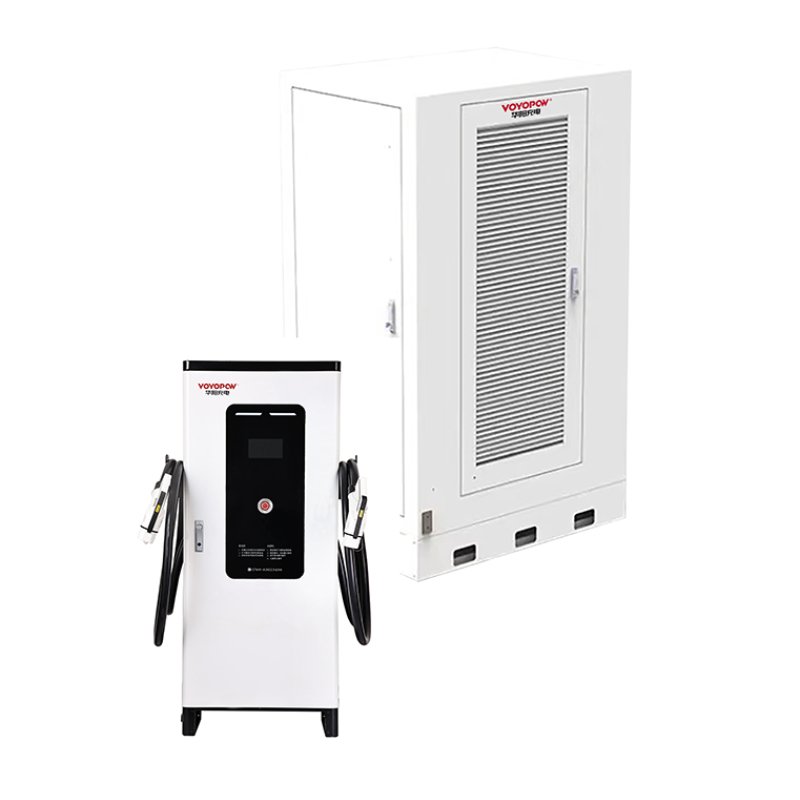
What if your electric vehicle could do more than just take you from point A to point B? What if it could also power your home during an outage, lower your electricity bills, and even help support the entire energy grid? This isn’t science fiction—it’s the reality enabled by a V2G EV charger.
This guide explores the revolutionary technology of Vehicle-to-Grid (V2G) charging, explaining how it works, its profound benefits, and what you need to join this cutting-edge energy movement.
What is a V2G EV Charger?
A V2G EV charger (Vehicle-to-Grid) is a specialized bi-directional charger that allows power to flow in two directions:
- Into the vehicle (G2V – Grid-to-Vehicle): Like a standard EV charger, it charges your car’s battery from the electrical grid.
- Out of the vehicle (V2G – Vehicle-to-Grid): This is the game-changer. It allows your EV’s battery to discharge stored energy back to your home (V2H – Vehicle-to-Home) or directly to the local utility grid (V2G).
In essence, a V2G-capable EV and its charger transform your car from a simple mode of transport into a mobile energy storage unit that can be integrated into the larger energy ecosystem.
How Does V2G Technology Work?
The magic lies in the bi-directional power conversion. While standard chargers only convert AC (from the grid) to DC (for the battery), a V2G charger performs this conversion in both directions.
Here’s the process:
· Charging (G2V): The charger converts grid AC power to DC power to fill the EV battery.
· Discharging (V2G): The charger converts the DC power from the EV battery back to clean, synchronized AC power and feeds it back to the grid or your home.
This entire process is managed by intelligent software that automates charging and discharging based on grid demands, electricity prices, and your personal driving needs.
The Transformative Benefits of V2G Charging
For EV Owners (Earning Money & Enhancing Resilience):
· Earn Revenue: You can sell excess energy from your EV battery back to the grid during periods of peak demand when electricity prices are highest. Utility companies may pay you for this service.
· Reduce Energy Costs: By powering your home with your EV during expensive peak hours (a concept called peak shaving), you can significantly lower your monthly utility bill.
· Backup Power (V2H): During a power outage, your EV can become a whole-home backup battery, keeping your lights on and essential appliances running for hours or even days.
For the Grid and the Environment (Creating a Sustainable Future):
· Grid Stabilization: A fleet of V2G-enabled EVs acts as a massive, distributed battery storage network. This helps balance supply and demand, supports the integration of intermittent renewables like solar and wind, and prevents blackouts.
· Renewable Energy Support: EVs can store excess solar energy generated during the day and feed it back to the grid in the evening when demand is high, making the grid cleaner and more efficient.
· Defer Infrastructure Upgrades: By providing localized power, V2G can reduce the strain on transformers and power lines, delaying the need for costly grid infrastructure investments.
V2G vs. V2H vs. V2L: What’s the Difference?
It’s important to distinguish between these related terms:
· V2G (Vehicle-to-Grid): Sends energy from the car to the public utility grid. Requires a specialized V2G charger and utility approval.
· V2H (Vehicle-to-Home): Powers your specific home during an outage or to offset usage. Can be a subset of V2G or a standalone system.
· V2L (Vehicle-to-Load): A simpler feature that allows you to plug appliances directly into your EV (like a mobile outlet) to power devices, but not your home’s main electrical panel.
Current Challenges and The Future of V2G
While promising, V2G is still in its early stages of adoption.
· Vehicle and Charger Availability: Currently, only a few EV models (e.g., Nissan LEAF, Mitsubishi Outlander PHEV) and specific bi-directional chargers from companies like Fermata Energy, Wallbox, and DCbel are V2G-capable.
· Battery Degradation Concerns: Frequent charging and discharging could potentially accelerate battery wear. However, modern battery management systems and smart software are designed to minimize this impact.
· Utility Programs and Regulations: Widespread adoption depends on the development of utility compensation programs and supportive government policies.
The future is bright, with major automakers like Ford (with its Intelligent Backup Power) and GM announcing plans for broader bi-directional functionality in upcoming models.
V2G EV Charger FAQs
Q: How much money can I make with a V2G charger?
A:Earnings vary based on your utility’s program, local electricity markets, and your driving habits. Early participants can earn hundreds of dollars per year by providing grid services.
Q: Will V2G ruin my EV’s battery?
A:Smart V2G systems are programmed to protect battery health. They operate within safe charging limits and typically only use a portion of the battery’s capacity, minimizing any additional degradation.
Q: Can I use any EV with a V2G charger?
A:No. You need both a V2G-compatible electric vehicle and a certified bi-directional EV charger. Always check your vehicle’s specifications.
Conclusion: Your EV as an Energy Asset
The V2G EV charger represents a paradigm shift. It redefines the electric vehicle from a passive energy consumer to an active, valuable component of a clean and resilient energy grid.
By investing in V2G technology, you’re not just buying a charger—you’re investing in energy independence, contributing to a stable grid, and unlocking the full financial potential of your electric vehicle.
Ready to explore if V2G is right for you? Check with your local utility for available programs and research V2G-compatible vehicles and chargers to power your future.